
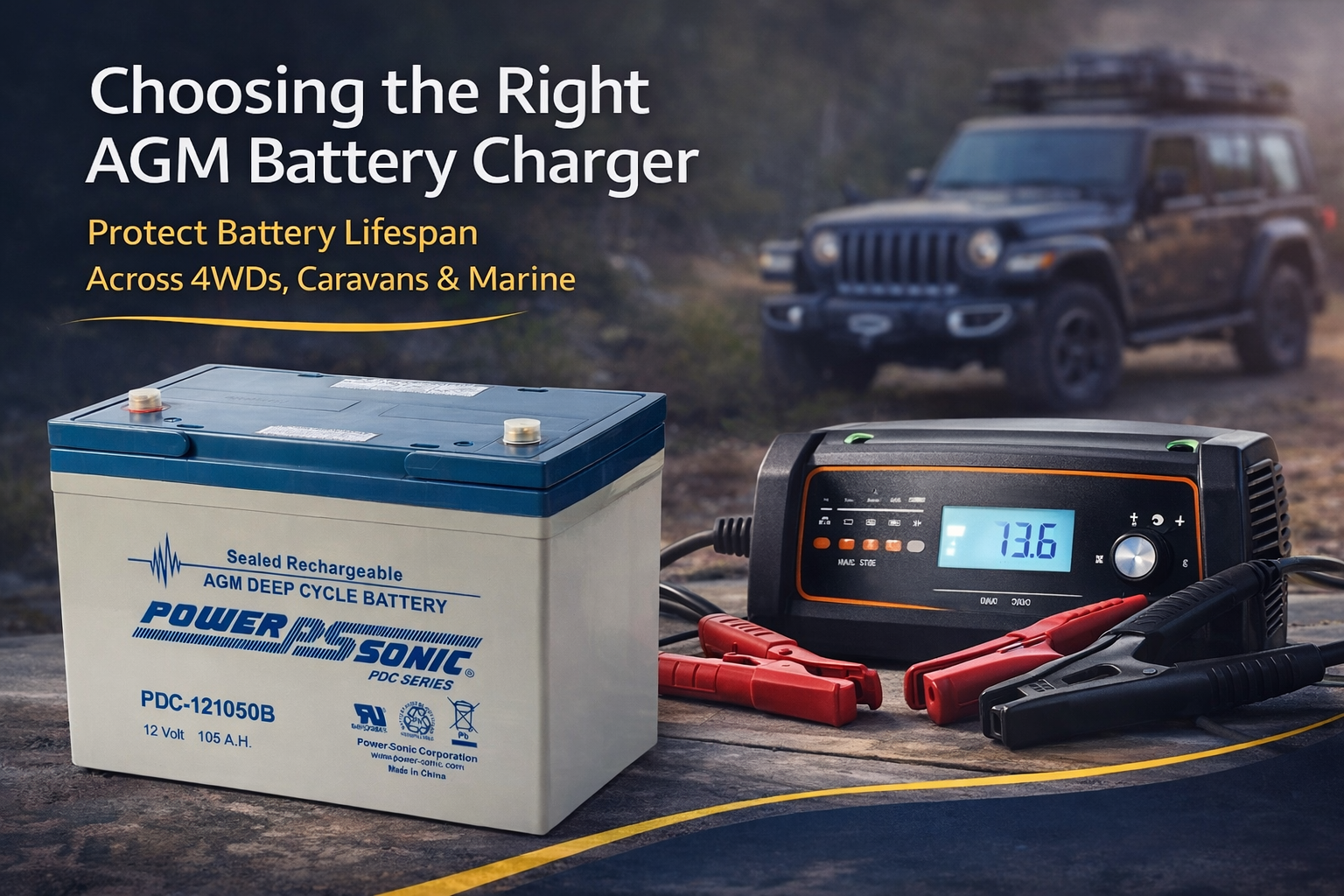
Electrical reliability is just as important as engine performance. Many battery failures blamed on “poor battery quality” are actually caused by incorrect charging. Across Australia, AGM batteries are widely used in 4WDs, caravans, marine systems and backup vehicle setups. Yet a large number fail earlier than expected because the charger was never properly matched to the battery.
If you are replacing a charger or upgrading your vehicle’s electrical system, this decision matters. A properly selected charger protects your battery, improves reliability and prevents expensive replacements.
For readers of Engine Problem Australia, where mechanical reliability and system performance are front of mind, understanding charging fundamentals is part of maintaining a dependable vehicle.
Why AGM Batteries Require the Right Charger
AGM stands for Absorbent Glass Mat. Unlike traditional flooded lead acid batteries, AGM batteries use fibreglass mats to hold the electrolyte in place. This sealed construction makes them vibration resistant, spill proof and suitable for off road and marine conditions.
However, that same sealed design makes them more sensitive to charging voltage.
Flooded batteries can vent excess gas more easily. AGM batteries cannot. If overcharged, internal pressure and heat increase. Over time this dries out the electrolyte and damages the plates. If undercharged, sulphation develops and capacity drops permanently.
This is why standard automotive chargers are often unsuitable. They may lack voltage precision or proper stage control. AGM batteries require specific absorption and float voltages set by the manufacturer. A charger that cannot maintain those levels accurately will shorten battery life.
In practical terms, incorrect charging leads to reduced cranking performance, shorter deep cycle runtime and unexpected system shutdowns in remote areas.
What Multi Stage Charging Actually Does
Modern AGM chargers operate using a multi stage charging process. Each stage serves a specific purpose.
Bulk Stage
This stage restores most of the battery’s charge quickly by delivering a higher current. After a camping trip, long marine outing or extended accessory use, bulk charging helps recover capacity efficiently.
Absorption Stage
Once voltage reaches a defined level, the charger reduces current while holding voltage steady. This controlled stage allows the battery to reach full charge without overheating.
Poorly regulated absorption is one of the main causes of AGM degradation.
Float Stage
After full charge is achieved, the charger shifts to float mode. Voltage drops to a maintenance level that keeps the battery healthy during storage. For vehicles parked between trips or backup systems rarely used, float control prevents both overcharging and gradual discharge.
Multi stage charging is not marketing language. It directly impacts battery lifespan. In Australian conditions where vehicles face heat, vibration and heavy accessory loads, proper stage control is essential.
Choosing the Correct Charger Amperage
Charger size must match battery capacity. A common rule of thumb is selecting a charger rated at 10 percent to 25 percent of the battery’s amp hour capacity.
For example, a 120Ah AGM battery typically pairs well with a charger between 12A and 30A depending on usage.
An underpowered charger may take excessive time to recharge the battery fully. This increases the risk of batteries sitting partially charged, which promotes sulphation.
An oversized charger can push too much current during the bulk stage, creating heat stress and unnecessary wear.
Matching amperage correctly ensures efficient charging without compromising long term health.
For 4WD owners running fridges, lights and inverters, selecting the correct amperage can mean the difference between dependable power and repeated battery issues.
Safety and Compatibility Features That Matter
Not all chargers are equal. When selecting AGM charging equipment, several features are worth prioritising.
Temperature compensation is particularly important in Australia. Batteries in engine bays, sheds or exposed environments experience wide temperature swings. A charger that adjusts voltage based on temperature helps prevent overcharging in hot weather and undercharging in cooler climates.
Reverse polarity protection prevents accidental damage during installation. Spark free operation improves workshop safety.
If your setup includes both lithium and AGM batteries, ensure the charger offers distinct charging modes. Lithium voltage limits differ significantly from AGM. Using a charger without dedicated AGM settings risks improper charging.
For buyers wanting to compare purpose built options designed specifically for AGM systems, reviewing a specialised range of agm battery chargers can help clarify appropriate voltage settings, amperage choices and safety features suited to Australian vehicle applications.
Marine grade housing and moisture resistance are also important for coastal and off road use.
A charger should be viewed as a long term system component, not a temporary accessory.
Common Charging Mistakes That Shorten Battery Life
Many AGM failures are preventable. The most common mistakes include:
Using basic automotive chargers not designed for sealed batteries. These units often lack proper voltage control.
Leaving batteries partially charged after use. AGM batteries should be fully recharged promptly to avoid sulphation.
Overcharging during long term storage. Chargers without accurate float control can slowly damage the battery.
Ignoring manufacturer voltage recommendations. Each AGM battery has specific absorption and float voltage requirements.
When vehicle owners experience repeated battery issues, the charging system should be inspected before replacing the battery again.
When It Is Time to Replace Your Charger
Charger technology has improved significantly in recent years. If your charger is more than a decade old, it may lack modern stage control and safety features.
Warning signs include inconsistent charging times, excessive heat during operation, audible fan strain or batteries failing to reach full capacity.
If your charger does not clearly indicate bulk, absorption and float stages, it may not provide the precision required for AGM chemistry.
Replacing an outdated charger proactively can prevent premature battery replacement and reduce the risk of electrical issues in remote travel situations.
Final Thoughts
AGM batteries are widely used across Australia because they offer durability and versatility. However, their lifespan depends heavily on proper charging.
Choosing the correct charger ensures voltage precision, stage control and compatibility with your system. Matching amperage appropriately and selecting modern safety features protects both performance and long term value.
For vehicle owners focused on reliability, charging equipment deserves the same attention as mechanical components. Making the right choice now can extend battery life, reduce unexpected failures and ensure dependable power whether you are touring remotely, running marine electronics or maintaining a dual battery setup.
Reliable charging is not optional. It is part of responsible vehicle ownership.